Most renovation projects begin with what the eye can see; color, texture, finish, the immediate visual payoff. But flooring doesn’t behave like a surface decision anymore. It behaves like a system endpoint. Once tile enters the picture, it quietly starts dictating how every hidden layer must perform. And when that coordination is missing, the failure doesn’t appear immediately, it surfaces later as movement, staining, lifting edges, or costly rework.
1. Waterproofing Membranes as Subsurface Moisture Control Systems
Water doesn’t challenge the tile itself first, it tests the weakest point beneath it. Bathrooms and wet zones rely on continuity below the finish, not surface resistance.Waterproofing only works when it behaves like one continuous skin under the surface.
That means liquid or sheet membranes need to run without breaks across floors and up the walls, especially where different planes meet. Those junctions, corners, drains, and edges, are where most problems eventually start, so they need extra reinforcement rather than trust in grout alone. Grout might finish the look, but it isn’t what actually holds water back over time. Any gap in continuity becomes a future migration path for moisture
Read More: Eco-Friendly Surface Ideas for Warm and Beautiful Homes
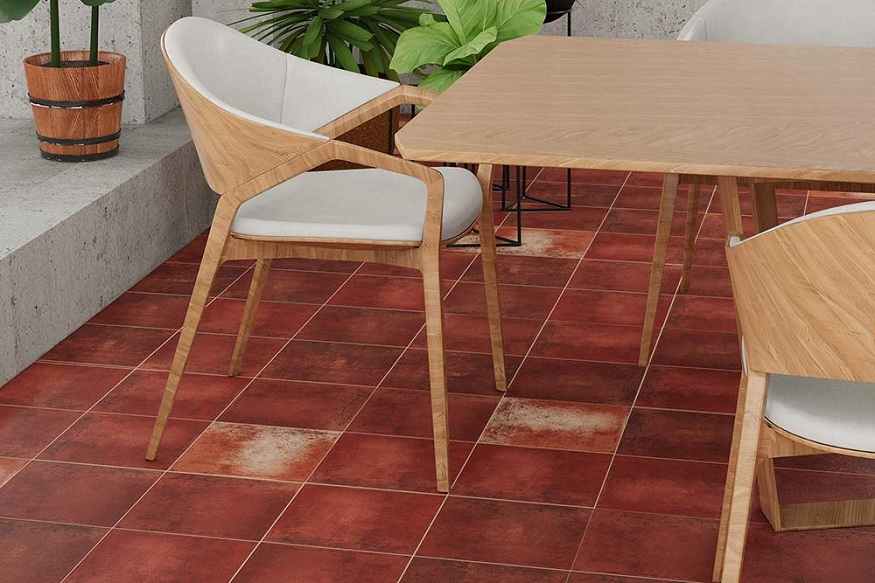
This is the moment where material choice stops being about appearance and starts becoming about behavior. Terracotta is naturally an open, earth-born material that reacts directly to its environment. Opting for a Terracotta Decorative Tile introduces a surface that is highly responsive to ambient conditions; it demands a subsurface waterproofing system that doesn’t just block liquid, but allows the clay format above it to breathe and manage humidity in a stable, controlled way. A tile surface is only as dependable as the invisible engineering underneath it that handles the water.
2. Underfloor Heating Integration as Thermal Expansion Coordination
Heat changes how materials behave, and tile is no exception. The challenge is not comfort, but movement over time. People often think heating is an upgrade. In reality, it’s a timing decision.
Once tiles are down, the opportunity is gone.
- Heating systems must be positioned and pressure-tested before any adhesive work begins
- Activation cycles need to be accounted for before the surface is locked in
- Adhesives must remain flexible enough to absorb expansion and contraction
That is where material mass becomes important. Thick terracotta formats and natural stone surfaces don’t just sit on heat, they store it and release it gradually, creating a steadier interior climate. In contrast, lighter ceramic formats respond faster but require more precise control underneath. Without this alignment, the floor begins to carry invisible stress long before any visible crack appears.
3. Subfloor Stabilization and Leveling as Structural Load Calibration
Tiles do not forgive movement, they record it.
- Timber subfloors must be stiffened to eliminate flex
- Concrete bases require correction through self-levelling compounds
- Load paths need to be distributed evenly before installation begins
This is the point where a floor either settles into your home for the long run or slowly turns into something you keep fixing.
Installing bigger tiles, heavy stone slabs, and thick terracotta pieces on even slight unevenness is unforgiving, while smaller tile formats tend to be more forgiving because they spread movement across more joints.
However, while quality tiles and precision craftwork are your ultimate renovation or installation project, the subfloor remains paramount as a structural foundation in executing clean, long-term installations. That’s why professional builders will provide insights on best subfloor that aligns with your tiling solution.
4. Interface Coordination between Flooring, Cabinetry, and Wall Systems
The final layer of precision happens where fixed elements meet the tiled surface. This is where good planning becomes visible.
- Cabinetry and countertops must be locked in before vertical tile runs are set
- Termination edges should resolve into existing architectural lines, not fight them
- Flexible joints are used where buildings naturally shift over time
Here, format and geometry quietly do the work. Linear tiles can tighten alignment against cabinetry, while patterned systems help absorb transitions between functional zones without relying on physical separation. The goal is not decoration, it’s continuity that still allows movement without damage.
Read More: Stop Settling: A New Way to Think About Where You Live
In essence, a well-tiled home is never just a surface decision. It is the outcome of multiple invisible systems either working together or quietly fighting each other underneath the finish. When these layers are properly aligned, the floor stops behaving like a decorative choice and becomes part of the home’s structural intelligence; stable, responsive, and built to carry real life without breakdown.
About the Author